Anthropic spent millions on a US audience to make that point. Hours before kickoff, OpenAI proved it by officially rolling out ChatGPT ads.
What ChatGPT ads look like
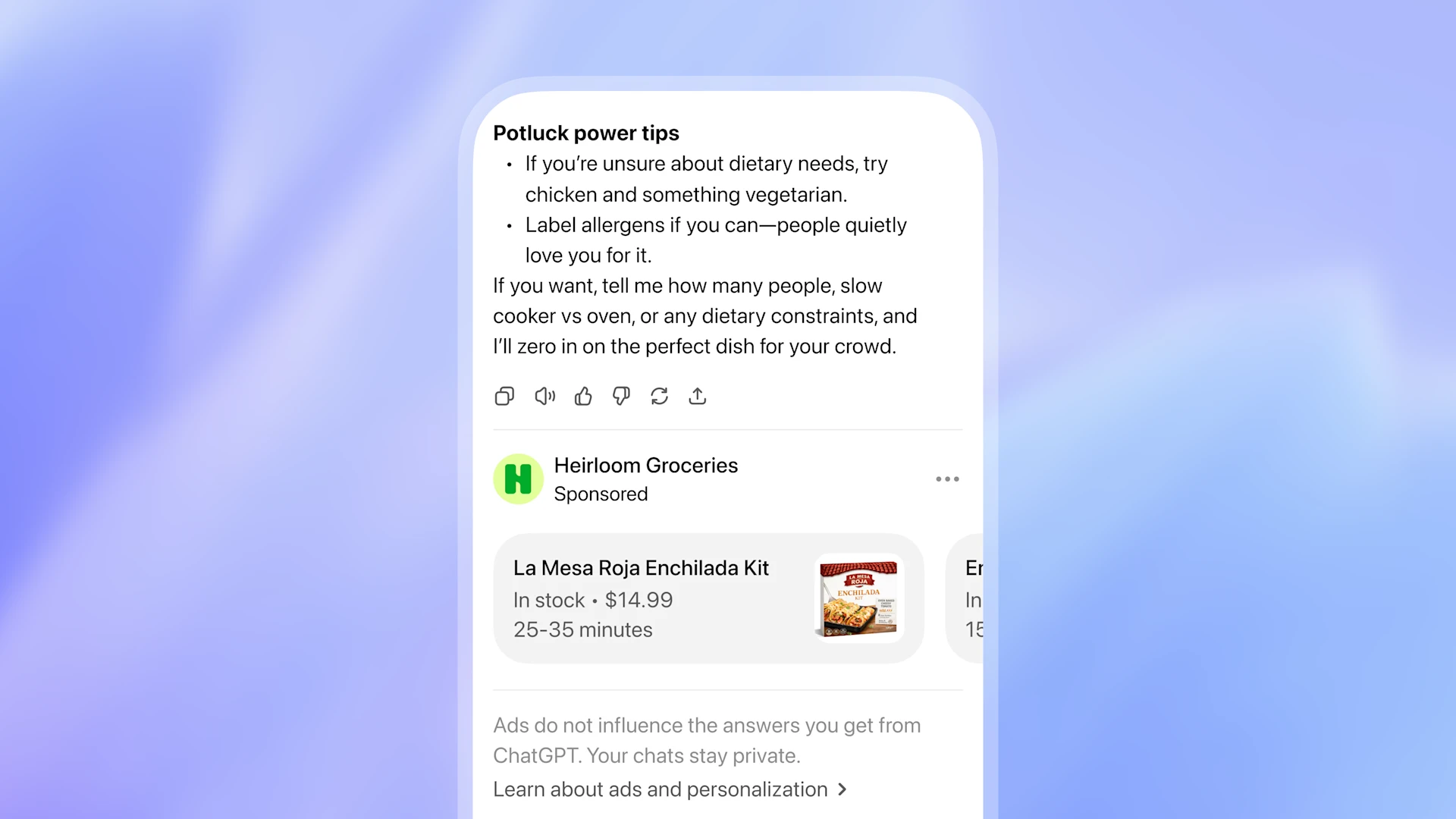
Since February 9, OpenAI is gradually rolling out labeled “sponsored” links at the bottom of ChatGPT responses:
- Who sees them. Free and Go tier users in the US. Not everyone yet; it’s a phased test.
- How they work. Contextual: ask about recipes, you might see a grocery delivery ad.
- Can you dismiss them? Yes. Users can close individual ads or turn off personalization.
Will ChatGPT ads come to Europe?
For sure :)
The ad-carrying ChatGPT Go tier already launched across the EU in January at €8 per month plus VAT. The ads themselves haven’t arrived yet. But EU regulation won’t be what stops them.
The EU’s advertising rules (DSA, DMA, and the AI Act transparency requirements arriving in August 2026) were built for social media and websites, not for an AI chatbot that remembers your conversations and knows not just what you want, but why. No current regulation covers that.
In any case, when ChatGPT ads will reach Europe, this will be likely the scenario:
- Go (€8/month + VAT): includes ads, no opt-out
- Plus (€23/month + VAT): ad-free
Will people pay to avoid ChatGPT ads? Unlikely.
Every time a tech company has added ads to a subscription product, most users accepted them. OpenAI isn’t inventing this pattern. They’re following it.
Here are two famous examples:
-
Netflix launched an ad tier across Europe in November 2022 at €5.99/month in France, similar in Germany, Italy, and Spain. Today, that tier has 190 million monthly active viewers worldwide. Ad tier viewing in Western Europe rose 32% in six months. More than half of new Netflix signups choose the plan with ads.
-
Uber did the same. You pay for the ride, but since late 2022 you also watch ads. Before, during, and after your trip. Journey Ads now run across ten European markets including France, Germany, Spain, and the Netherlands. Uber’s ad business hit $1 billion in annual revenue in 2024. Nobody stopped riding.
And there are many more examples. But Anthropic (Claude) say they will never use ads… Hmm, we’ll see.
Can Anthropic win the “no ads” bet?
Good question. (cit.)
Kagi, the paid ad-free search engine, has been promising this for years: ten dollars a month, no ads, no tracking. They have 38,000 paying members. In a world of billions of Google users, “no ads” wasn’t a compelling enough reason to switch.
But Anthropic isn’t Kagi. Claude competes with ChatGPT on quality, not just principles. The question is whether Anthropic can keep that promise, or whether they’ll succumb. Just as OpenAI did, fifteen months after Sam Altman called advertising a “last resort”.
Google’s Gemini ads: already happening in Search
Adweek reported that Google briefed advertisers about Gemini ads for 2026. Google’s VP of Ads denied it. But Google Search already shows ads in AI Overviews. Make of that what you want.
Of course, for Google this isn’t new territory. When they launched AdWords in 2000, ads were the business model from day one. OpenAI did it the other way around: subscriptions first, then ads. Either way, the destination is the same.
What about the marketers?
The ad-supported AI model is now the default. Users will tolerate it. The question is what this means on the other side of the equation.
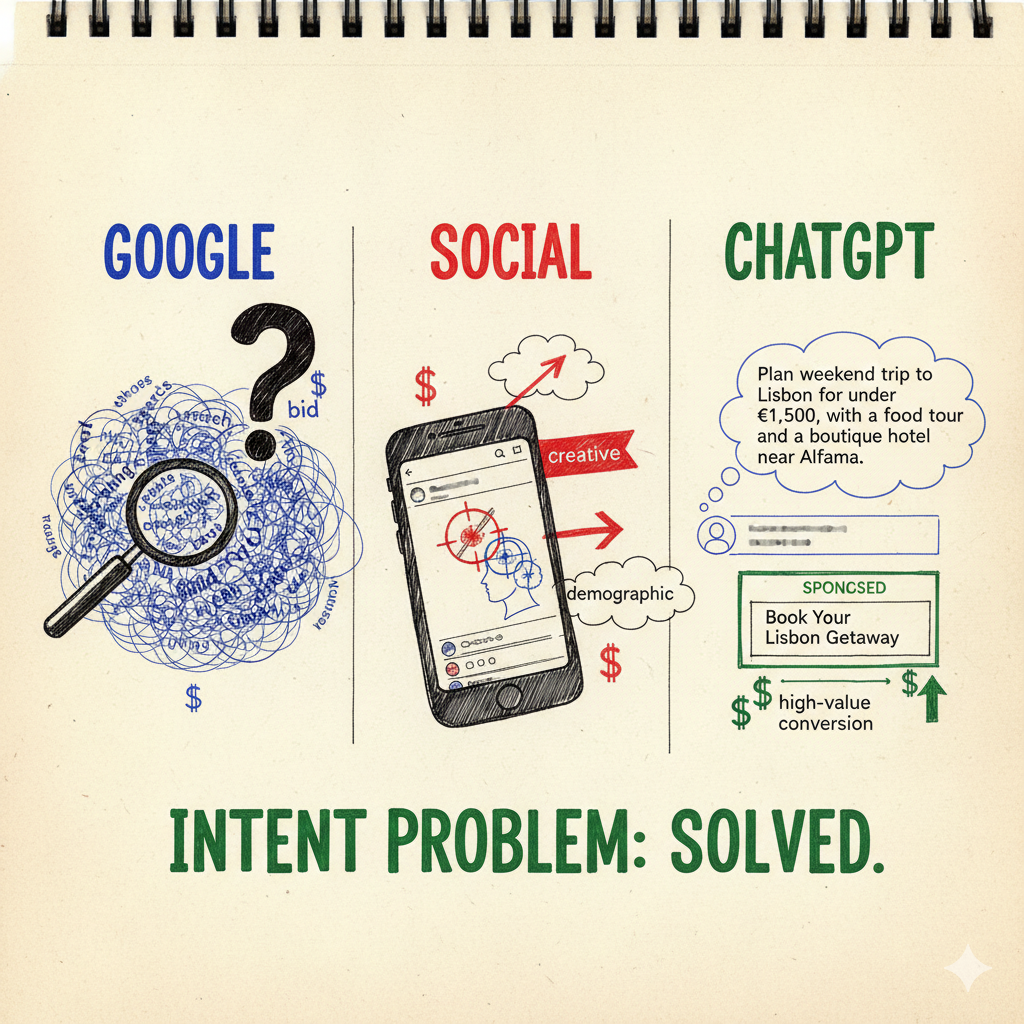
For marketers, this is a bigger story. ChatGPT may have just created the most valuable advertising channel since Google Search: one where the user has already told the AI exactly what they need, why, and how much they want to spend. We break down the numbers, the $60 CPMs, and the intent advantage in ChatGPT ads solve the intent problem.
Will you pay €23 to avoid ChatGPT ads, or just accept them? Tell us on LinkedIn.